
By
Gigabit Systems
October 8, 2026
•
20 min read
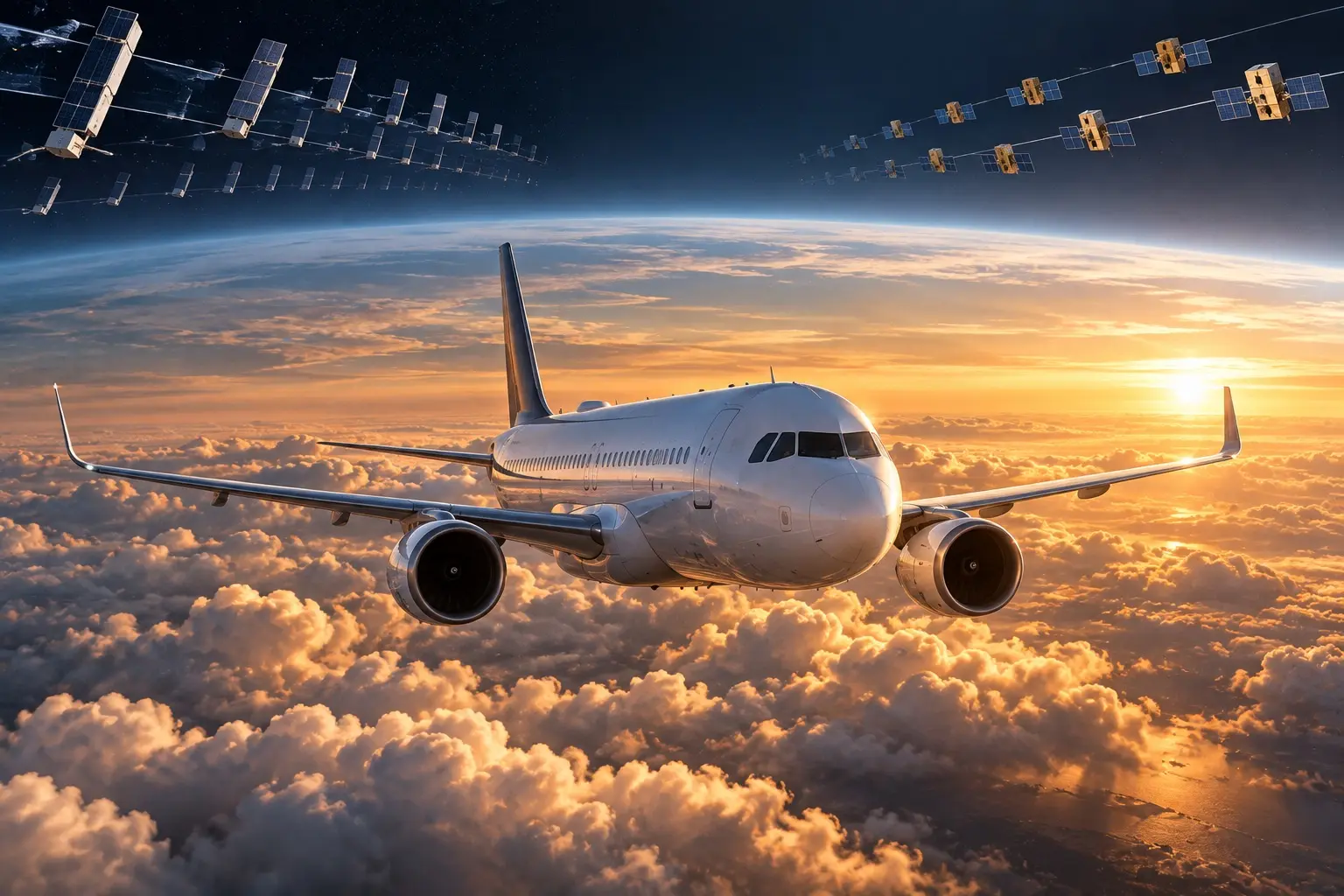
Delta Rejected Starlink. Its CEO Didn’t Want To Work With Elon Musk.
Delta chose the satellite network of tomorrow over today’s market leader.
Delta Air Lines is making a multiyear bet on the future of in-flight internet.
Rather than installing SpaceX’s Starlink system, which is already operating aboard commercial aircraft, Delta has chosen Amazon’s competing satellite network, Amazon Leo.
The airline plans to begin installing Leo equipment on 500 aircraft starting in 2028.
But according to a September 30 report from Cybernews, the decision may involve something beyond satellite performance, coverage or price.
It may involve Elon Musk himself.
Delta CEO Ed Bastian reportedly told employees:
“We don’t want to be with Elon Musk. Trust me.”
The quote has attracted attention because it suggests that the reputation of a technology company’s founder may have influenced a major airline’s infrastructure decision.
There’s one significant problem, however.
The quote hasn’t been independently authenticated.
And the distinction between what Delta has officially announced and what Bastian reportedly said is essential to understanding this story.
The Quote That Started the Controversy
According to Cybernews, aviation industry commentator JonNYC reported receiving accounts of remarks Bastian allegedly made at two internal Delta events.
At one event, Bastian reportedly said the airline didn’t want to work with Musk.
At another, he allegedly said Delta had tested Starlink but decided against partnering with the company.
One reported remark was particularly pointed:
“If you know his reputation, it’s all true what they say about him.”
But Cybernews also acknowledges that JonNYC could not confirm whether the quotations were entirely accurate.
That matters.
An anonymous account of remarks at an internal meeting isn’t the same as a recorded interview, authenticated transcript or official corporate statement.
The confirmed decision is that Delta selected Amazon Leo.
The claim that Musk’s reputation was the decisive reason remains unverified.
That distinction doesn’t make the business implications any less interesting.
But Delta Has a Different Explanation
When Delta announced its Amazon partnership on March 31, 2026, Bastian publicly described the agreement as providing advanced, cost-effective connectivity while expanding an existing relationship with Amazon Web Services.
That’s an important part of the story.
Delta already relies on Amazon for cloud technology. Its new satellite agreement is part of a broader relationship covering digital services, passenger experiences and operational infrastructure.
There may also have been commercial disagreements with Starlink.
Musk has said Delta wanted to deliver Starlink through its own branded passenger portal, something he was unwilling to accommodate. Other reporting has pointed to financial considerations as a significant sticking point.
That leaves several plausible factors behind Delta’s decision: pricing, branding, integration, existing partnerships and executive relationships.
The available evidence does not establish which factor was decisive.
The Difference Between Starlink and Amazon Leo Is Enormous
Starlink
Established network
More than 11,000 satellites, with service already deployed across commercial airline fleets.
Amazon Leo
Emerging competitor
Approximately 396 satellites reported in orbit in late September, with Delta installations planned for 2028.
The numbers tell an important story.
Starlink is already operating at commercial scale. Amazon Leo is still building out its constellation and service.
But the satellite count alone doesn’t determine future performance.
What matters to an airline is the complete service: coverage, bandwidth, reliability, terminal performance, cost, contractual commitments and integration with onboard systems.
Amazon is betting that by 2028 it can deliver a service competitive enough to justify Delta’s decision.
Delta is betting on that future.
Meanwhile, United Is Already Installing Starlink
United Airlines took a different approach.
Rather than waiting for Amazon’s constellation, it began deploying Starlink on its aircraft.
In June 2026, United announced that more than 400 planes were already equipped, with a goal of approaching 1,000 by the end of the year. Its first Starlink-equipped widebody transatlantic flight operated between Newark and London.
That gives United a practical marketing advantage.
It can sell passengers a connectivity experience that already exists.
And United has started using that distinction competitively.
Recent reporting describes the airline targeting frequent flyers from Delta and American Airlines through loyalty-status promotions while emphasizing its Starlink connectivity.
In other words, the satellite decision is no longer simply an IT procurement issue.
It’s becoming a customer-acquisition strategy.
Delta Isn’t Flying Without Internet
One misleading impression in the public argument is that Delta passengers must wait until 2028 to get usable Wi-Fi.
They don’t.
Delta already operates Delta Sync Wi-Fi on nearly 1,300 aircraft, offering fast, free connectivity to eligible SkyMiles members on equipped flights.
Its existing service uses other connectivity providers, including Viasat.
Amazon Leo is intended as a next-generation upgrade, not Delta’s first attempt at in-flight internet.
And this matters when comparing the two airlines.
A poor connection on a Delta flight today doesn’t demonstrate that Amazon Leo is inferior.
Amazon Leo isn’t powering those flights yet.
Similarly, the performance of Starlink-equipped United aircraft doesn’t guarantee that every aircraft, route and future deployment will provide an identical experience.
The meaningful comparison will require real-world data once both systems are operating at scale.
Musk Responded With a Warning
The dispute quickly moved from procurement into a public confrontation.
After the alleged Bastian comments circulated, Musk wrote that the Delta CEO would lose his job over the decision.
He also mocked Delta’s existing connectivity, suggesting that an airplane without reliable internet would be an excellent place to contain an AI system.
Those are Musk’s statements and criticisms, not evidence that Bastian’s job is in jeopardy or that Delta’s current internet service is universally unreliable.
The exchange illustrates how infrastructure decisions can become personal when major technology companies are closely associated with their founders.
But the underlying business question is more consequential than the public argument.
The Cybersecurity Angle: Choosing a Vendor Means Choosing a Dependency
For an airline, satellite internet isn’t just a passenger convenience anymore.
It increasingly supports a connected environment involving passenger devices, business communications, cloud applications and potentially operational data services.
That means vendor selection has security and resilience implications.
Consider the questions an airline—or any business—should ask before committing to a major connectivity provider.
Who controls the infrastructure? How is traffic protected? What happens during a regional outage? How are terminals updated? How are security incidents communicated? What happens if the commercial relationship deteriorates? Can the customer migrate to another provider without replacing enormous amounts of equipment?
These questions apply just as directly to an SMB selecting an MSP, cloud provider, cybersecurity platform or telecommunications vendor.
The cheapest or fastest provider isn’t automatically the lowest-risk provider.
Vendor Concentration Can Become a Bigger Problem Than Performance
There’s another fascinating dimension to Delta’s decision.
The airline already works closely with AWS.
Expanding into Amazon Leo could create operational and commercial efficiencies through a broader partnership.
But deeper integration can also create concentration risk.
The more services one vendor provides, the more consequential that relationship becomes.
Conversely, selecting a separate connectivity provider can introduce additional vendors, contracts and integration challenges.
Neither architecture is automatically safer.
The appropriate choice depends on how the systems are connected, which failures are shared and what independent recovery options exist.
This is the same conversation businesses should be having about Microsoft 365, cloud hosting, identity providers, backup systems and managed IT services.
A vendor relationship should make your business stronger without making it helpless.
There’s a Second Risk: Buying Technology That Doesn’t Exist Yet
Delta’s Amazon Leo decision highlights a familiar technology procurement dilemma.
Do you buy the mature product available today?
Or commit to an emerging platform that promises better economics and capabilities tomorrow?
Waiting can make sense.
Early adoption can also make sense.
But future capabilities need to be separated from demonstrated performance.
Amazon has substantial resources, aerospace engineering expertise and an existing cloud business. Those are meaningful advantages.
Yet none of them substitutes for operational evidence from thousands of commercial flights.
Until Leo is deployed at scale, its actual in-flight reliability and economics remain to be demonstrated.
For an enterprise customer, that means contracts should address missed milestones, service levels, remedies, support, security obligations and exit options.
A roadmap is not a service-level agreement.
The Real Test Arrives in 2028
By the time Delta begins its planned Amazon Leo installations, the competitive landscape may look very different.
Starlink may have expanded significantly.
Amazon Leo may have deployed many more satellites.
Airline connectivity expectations may have increased.
And passengers may consider reliable, low-latency internet as basic an amenity as electricity at their seats.
The decision will ultimately be judged through operational outcomes: reliability, passenger satisfaction, economics and how well the network supports Delta’s needs.
The alleged comments about Elon Musk make for an entertaining headline.
But the larger story is about something every business eventually confronts.
You aren’t merely buying technology.
You’re entering a long-term relationship with the people and organizations responsible for delivering it.
Technology specifications matter. So does who stands behind them.
70% of all cyber attacks target small businesses, I can help protect yours.
#Technology #Starlink #Cybersecurity #Aviation #ManagedIT
Delta rejected Starlink because its CEO didn’t want to deal with Elon Musk. Musk responded by saying the CEO would lose his job. Meanwhile, United is already installing Starlink, while Delta’s Amazon Leo rollout won’t begin until 2028. The alleged CEO remarks remain unverified—but the technology battle is very real.