
By
Gigabit Systems
October 14, 2026
•
20 min read
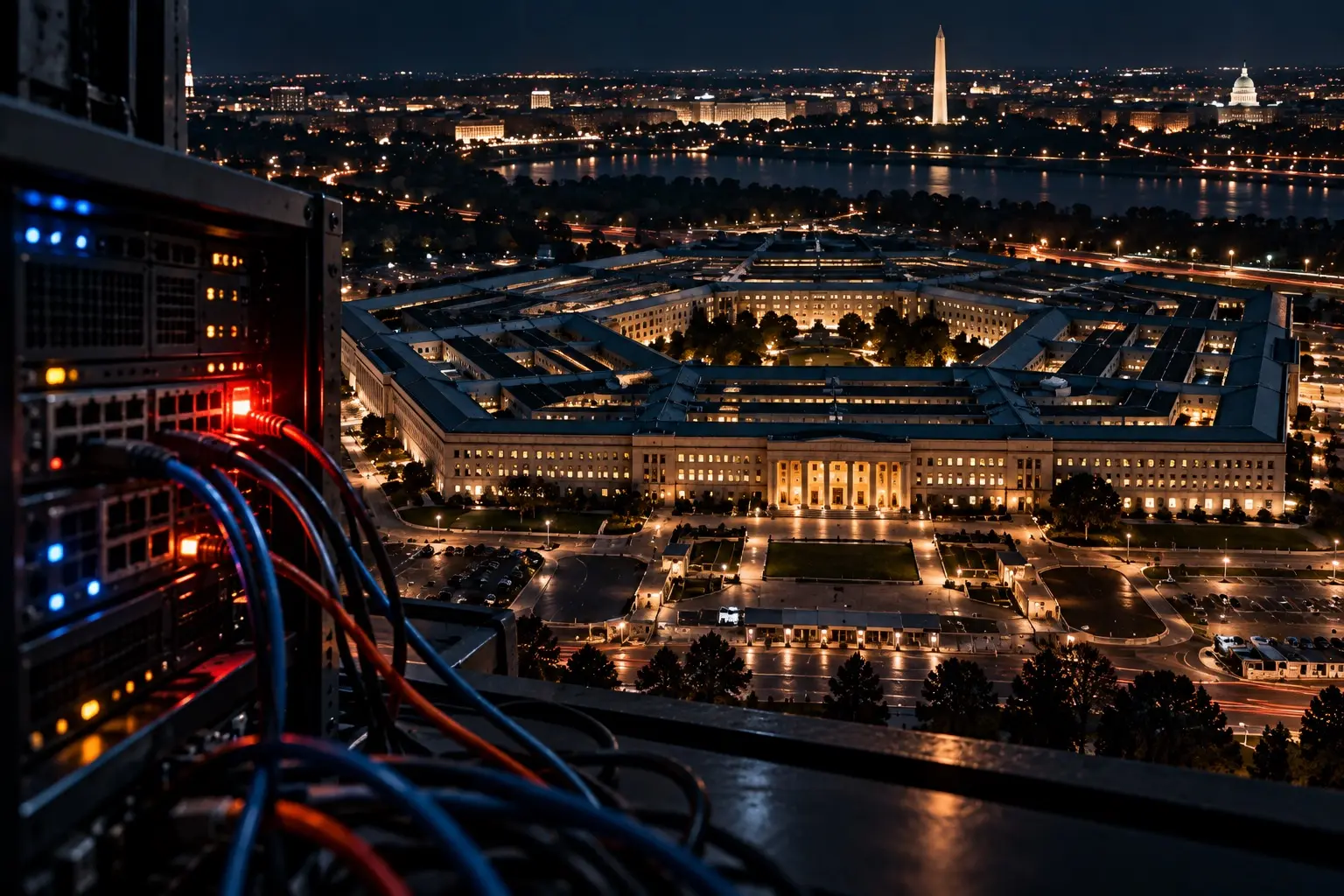
Pentagon Data Breach Exposes 3 Million People. The Hackers Had Nine Months.
The Pentagon discovered the breach nine months after access began.
The Pentagon spends billions of dollars protecting America’s military infrastructure.
Yet a vulnerability in one of its personnel information systems allowed unauthorized users to access sensitive records belonging to more than three million people.
The information included Social Security numbers, birth dates, contact information and, in some cases, details about military occupations.
The breach affected active-duty service members, veterans, civilian employees, contractors and others connected to the U.S. military.
And perhaps the most alarming detail wasn’t the number of people affected.
It was how long the unauthorized access went undetected.
According to Pentagon officials and breach notification letters, the exposure lasted from October 2025 until July 16, 2026.
Nearly nine months.
During that period, unauthorized users could access files containing sensitive personal information.
The Pentagon says it has found no evidence that the information has been misused.
But the incident raises a critical cybersecurity question:
How does a system containing millions of sensitive government records remain exposed for nearly nine months before the vulnerability is discovered?
What Happened Inside the Pentagon’s Personnel System?
The breach involved the Defense Manpower Data Center (DMDC), an organization responsible for maintaining personnel information used throughout the Department of Defense.
The DMDC manages records related to military service, personnel identification, benefits eligibility and other administrative functions.
Its systems support an enormous population, including military members, veterans, government employees and their families.
According to reporting by Military Times and Federal News Network, the incident originated in a vulnerability affecting a DMDC file-sharing system.
Unauthorized users exploited that weakness to access files stored on a server.
The vulnerability was discovered on July 16, 2026, and the affected system was subsequently patched.
Importantly, the publicly disclosed information does not establish that attackers compromised the Pentagon’s classified military networks or gained control of operational weapons systems.
This was a breach involving a personnel information system.
But the sensitivity of the records makes it a serious incident.
More Than 3 Million People Affected
3.05M
Total people affected, approximately
9 months
Reported unauthorized-access window
2.76M
Living individuals affected
294K
Deceased individuals’ records affected
Figures reported by ABC News, citing a U.S. defense official.
The compromised records contained varying combinations of personally identifiable information.
Reportedly exposed fields included names, Social Security numbers, dates of birth, contact details and military occupational specialties.
The records were stored unencrypted in the affected files, according to breach notifications.
That detail matters enormously.
Encryption is not a complete defense against every data breach. An attacker who compromises an application or authorized account may sometimes obtain data after it has been decrypted.
But storing sensitive records without appropriate encryption can remove an important protective layer if files are accessed outside their intended controls.
Why Military Employment Information Is Especially Sensitive
Most people understand why exposed Social Security numbers create identity theft risks.
But military personnel information introduces another dimension.
A person’s military occupation, employment history and service affiliation can help establish their professional background.
Combined with names, contact information and other personal details, that information could potentially support highly targeted social engineering.
For example, a criminal might impersonate a military benefits administrator and contact a veteran using accurate personal information.
Or someone might create a convincing phishing message referencing an individual’s military role.
In some circumstances, aggregated personnel information could also have intelligence value.
That does not mean the Pentagon has confirmed espionage or that every affected individual faces a national security threat.
The identity and motives of the unauthorized users have not been publicly established.
But it demonstrates why the sensitivity of a data breach cannot be measured solely by the number of records involved.
The combination of information exposed can be more dangerous than any individual data field.
The Most Disturbing Detail: Nine Months Without Detection
The timeline deserves particular attention.
October 2025 — Unauthorized access begins
A small number of unauthorized users reportedly begin accessing files through the vulnerable system.
July 16, 2026 — Vulnerability discovered
DMDC identifies the file-sharing vulnerability and patches the affected system.
September 18, 2026 — Breach notifications issued
Affected individuals begin receiving notification letters describing the incident and available identity-protection services.
Late September 2026 — Public reporting
Military Times, Federal News Network and other outlets report the incident’s scale.
Timeline based on DMDC notification details reported by Military Times and Nextgov/FCW.
There is an important technical distinction here.
The disclosed timeline identifies the period during which unauthorized access occurred or was possible. Public reporting does not establish that the intruders were continuously active every day for nine months.
Nevertheless, the lengthy exposure raises serious questions about vulnerability management, monitoring and access controls.
Why was the vulnerability not identified sooner?
What activity was logged?
Were alerts generated?
Could the unauthorized users access the same records repeatedly?
Were files copied outside the system?
The available public information does not answer all of those questions.
But they are precisely the questions an incident response investigation should address.
No Evidence of Misuse Doesn’t Mean No Risk
Pentagon officials have said investigators found no evidence that the exposed information was misused.
That is reassuring, but it should not be interpreted as proof that the information is safe.
There are several reasons.
First, determining whether personal information has been misused can be difficult.
Second, stolen identity information may remain valuable for years.
Unlike a password, a Social Security number cannot simply be changed through a routine account-security procedure.
Third, not every misuse produces an immediately visible signal.
Information could potentially be retained, combined with other datasets or used in future fraud attempts.
The Pentagon’s statement should therefore be understood as a description of what investigators have found, not a guarantee about what can happen later.
The same distinction applies to private-sector data breaches.
When an organization announces that it has found no evidence of misuse, that statement is only as strong as the evidence and monitoring supporting it.
The FBI Was Dealing With a Separate Breach
The Pentagon disclosure also came amid reporting about another federal cybersecurity incident.
In early October 2026, Reuters reported that a contractor associated with Accenture had been removed from an FBI project after a breach involving the FBI’s employment portal.
According to the report, the incident involved a failure to apply a critical security patch to an Oracle PeopleSoft system, which attackers associated with ShinyHunters exploited.
These were separate incidents.
There is no established public evidence connecting the Pentagon breach to the FBI incident or attributing both to the same attackers.
Nevertheless, the timing illustrates a recurring problem in large organizations.
Sensitive information can be exposed through systems that are not necessarily considered the organization’s most important or highly classified infrastructure.
A personnel database.
A recruitment portal.
A file-sharing server.
These systems may not attract the same attention as operational or mission-critical platforms.
But they can contain enormous quantities of valuable personal information.
Hackers don’t always need to penetrate the most heavily defended system. They can target the system holding the data they want.
What Every Business Should Learn From the Pentagon Breach
If a federal organization responsible for millions of sensitive personnel records can experience a months-long exposure, smaller businesses should take the underlying risks seriously.
The lesson is not that cybersecurity is hopeless.
It’s that effective protection requires more than a firewall and antivirus software.
1. Know Where Sensitive Data Lives
Many organizations maintain sensitive information in more places than they realize.
File servers.
Cloud storage.
Shared folders.
Legacy applications.
Human resources systems.
Email attachments.
Old backup repositories.
Businesses should maintain an inventory of sensitive data and identify which systems, users and third parties can access it.
You cannot adequately protect information you don’t know exists.
2. Encrypt Sensitive Information
Sensitive personal records should be protected with encryption appropriate to the system and threat model.
That includes encryption at rest and in transit, with careful management of encryption keys.
For especially sensitive data, organizations should also consider application-level encryption or tokenization.
Encryption does not replace access controls, but it can reduce the consequences of certain types of unauthorized file access.
3. Patch Vulnerabilities Before Attackers Find Them
The Pentagon incident involved a vulnerability in a file-sharing system.
Public reporting has not established the specific product or flaw responsible.
That means it would be inappropriate to claim that a particular vendor, CVE or missed update caused this breach.
However, the incident reinforces the importance of identifying and remediating vulnerabilities in internet-facing and internally accessible systems.
Businesses need asset inventories, vulnerability scanning, risk-based patching and procedures for handling systems that cannot be patched immediately.
4. Monitor for Unauthorized Access
A system can be compromised even when it continues functioning normally.
Employees may still log in.
Files may still open.
Applications may still run.
Without adequate monitoring, suspicious access can go unnoticed.
Managed detection and response, EDR/XDR, centralized logging and SIEM monitoring can help identify unusual activity.
For file-sharing systems, particularly useful signals may include abnormal access volumes, unexpected account activity, repeated downloads and access from unusual locations.
No monitoring platform guarantees immediate detection.
But organizations should not rely on a user noticing something wrong months after access begins.
5. Restrict Access to Sensitive Records
Least-privilege access is one of the most effective ways to limit the damage from compromised accounts and vulnerable systems.
Employees and applications should only have access to the information required for their responsibilities.
Multifactor authentication should protect supported accounts, especially administrative and remote access.
Sensitive repositories should be segmented where practical, and unnecessary sharing permissions should be removed.
If one account or system is compromised, the attacker should not automatically gain access to everything.
6. Prepare for the Breach Before It Happens
Incident response planning should address how the organization will investigate unauthorized access, preserve evidence, contain compromised systems, notify affected parties and restore secure operations.
For healthcare providers, law firms, schools and other organizations handling sensitive information, notification obligations may depend on the type of information involved and applicable laws or contractual requirements.
An MSP can help implement security controls and coordinate technical response, but organizations also need appropriate legal and operational planning.
The goal is to reduce both the likelihood of a breach and the damage if one occurs.
What Affected Military Personnel and Veterans Should Do
The Defense Manpower Data Center has offered affected individuals a year of credit monitoring and identity-restoration services.
Anyone who receives a legitimate notification should review the instructions carefully.
But one year of monitoring does not eliminate the longer-term risk associated with exposed Social Security numbers.
Consider these additional protections:
Freeze your credit. A free security freeze with Equifax, Experian and TransUnion can make it harder for criminals to open new credit accounts in your name.
Review financial accounts. Watch for unfamiliar transactions, new accounts and unexpected changes to personal information.
Use an IRS Identity Protection PIN. This can help prevent someone from filing a fraudulent federal tax return using your Social Security number.
Watch for targeted phishing. Be skeptical of unexpected calls, emails or messages claiming to come from military benefits offices or government agencies.
Verify breach notices independently. Avoid entering sensitive information into websites reached through unsolicited messages. Use independently verified official contact information.
Free credit freezes are available through Equifax, Experian and TransUnion.
The IRS explains its Identity Protection PIN program at IRS.gov.
The Real Warning Isn’t the Size of the Breach
Three million affected individuals is a staggering number.
But the number alone doesn’t explain the cybersecurity failure.
The more consequential issue is that unauthorized access to sensitive, unencrypted records reportedly persisted across a lengthy period.
That points to questions about how organizations discover vulnerabilities, monitor sensitive systems and detect suspicious activity.
The Pentagon’s investigation may eventually provide more technical details.
Until then, the precise initial access method, the full extent of data removal and the attackers’ identities remain important unanswered questions.
What is already clear is that sensitive data can be placed at risk through an ordinary administrative system—not necessarily through a dramatic attack against classified infrastructure.
And that lesson applies to businesses of every size.
Your Data Doesn’t Become Less Valuable Because You’re a Small Business
A small law firm may hold thousands of confidential documents.
A healthcare practice may maintain years of sensitive patient information.
A school may store student records, family contact information and employee Social Security numbers.
An SMB may keep payroll files, tax documents and customer databases on a shared server.
To an attacker, that information can be valuable regardless of whether the organization employs ten people or ten thousand.
The Pentagon breach is a reminder that the systems holding sensitive information deserve continuous attention.
Not just during a compliance audit.
Not just after a vulnerability makes headlines.
And certainly not only after someone discovers that unauthorized users have been accessing files for months.
The most dangerous breach may be the one nobody knows is happening.
70% of all cyber attacks target small businesses, I can help protect yours.
#Cybersecurity #Pentagon #DataBreach #DataProtection #ManagedIT
THE PENTAGON WAS BREACHED. FOR NINE MONTHS.
Over 3 million military-affiliated individuals had sensitive personal records exposed, including Social Security numbers, birth dates and military employment details.
The vulnerability reportedly existed from October 2025 until July 2026, when officials finally discovered and patched it.
If the Pentagon can go nine months without discovering unauthorized access, how confident are you that someone isn’t already inside your business systems?